


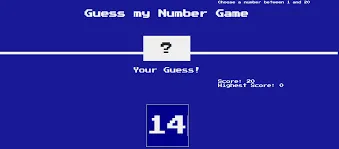
You know that moment—the screen flashes “Too High,” your last guess was 67, and suddenly your brain blanks. Don’t worry. Whether you’re facing guess my number questions in a classroom challenge, a Topmarks math game, or a late-night browser rabbit hole, the path to victory isn’t luck. It’s a clean, repeatable system.
Below is everything I’ve learned from speed-running these games and digging into the JavaScript behind them. Consider this your playbook.
Why Guess My Number Questions Feel Harder Than They Are
Most people treat guess my number questions like a random lottery. They throw out 50, then 30, then 80, and hope for the best.
The truth? Every guess my number question follows logic. The number was chosen by a system—and systems have patterns. Once you understand the math underneath, you stop guessing and start solving.
1. Binary Search: The 7-Guess Rule
If you only take one thing from this guide, make it this: binary search.
When you face any guess my number question with a known range (say, 1–100), your goal is to cut the possibilities in half—every single time.
- Start with the middle number: 50
- If the game says “Too High,” your new range is 1–49. Guess 25
- If it says “Too Low,” your new range is 51–100. Guess 75
Repeat until only one number remains.
This method guarantees you’ll crack any guess my number question between 1 and 100 in seven guesses or fewer. No exceptions.
2. Using Questions and Clues Like a Detective
Advanced versions of the game—especially educational platforms like Topmarks—don’t just tell you “Too High” or “Too Low.” They give you real clues.
When you encounter guess my number questions with built-in hints, treat each one like a filter:
- Parity: “The number is even” instantly kills half the possibilities.
- Multiples: “Multiple of 5” means you’re only looking at numbers ending in 0 or 5.
- Digit Sum: “The sum of the digits is 10” narrows a two-digit range to combinations like 19, 28, 37, 46, 55, etc.
- Prime Status: “It is a prime number” focuses your search on 13, 17, 19, 23, 29, and so on.
These clues turn guess my number questions from blind guessing into a clean deduction puzzle.
3. Place Value Strategies for 2-Digit and 3-Digit Puzzles
Some guess my number questions focus heavily on place value. You’ll see clues like:
- “The tens digit is greater than the ones digit” → candidates include 41, 83, 92
- “The number has 6 tens and 4 ones” → the answer is 64
- “When rounded to the nearest 10, the answer is 40” → the target sits between 35 and 44
If you’re tackling guess my number questions in math-focused versions (like those used in classrooms), place-value logic is often the fastest route.
4. Developer “Cheat Codes” for Web Versions
Let’s be honest: sometimes you just want the answer.
Most browser-based guess my number questions are built with plain JavaScript. That means the secret number is sitting in memory—and you can see it.
Here’s how:
- Press F12 to open Developer Tools
- Click the Console tab
- Type
secretNumberornumberand hit Enter
If the developer didn’t intentionally hide the variable, the console will return the exact target.
This works on countless versions hosted on Netlify, personal portfolio sites, and even some classroom tools. Just don’t tell your teacher I told you.
💡 Pro tip for creators: If you’re building your own guess my number questions game, you can protect against this by minifying your code or scoping variables inside a closure.
5. Key Terms You’ll See Again and Again
When you’re deep in guess my number questions, you’ll run into the same vocabulary across every version:
- Secret Number: The target value you’re trying to guess
- Range: The boundaries (e.g., 1–100, 1–500)
- Attempt / Guess: Each number you submit
- High Score: The lowest number of attempts to win
- Input Field: Where you type your guess
Knowing these terms makes it easier to follow game instructions and—if you’re modding or building your own—read the source code.
Related Articles
Ultimate Prism Runway Show Codes (March 2026)
Ultimate Elemental Magic Arena Codes (March 2026)
Ultimate Soccer Incremental Codes (March 2026)